
About half a year ago, I wrote about the Oceaneva Deep Marine Explorer VI (DME VI), a watch that mainly impressed with its insane 6000 m water resistance. In that article, I was also very clear that the overall design didn’t really convince me. To quote myself: “I have to admit I’m a bit underwhelmed with the design choices. It feels like the designers tried to cherry-pick the ‘best of’ features—either based on their own preferences or customer feedback—from models. Apart from the dial face, which is entirely new, everything else feels familiar. The dial layout, indices, date window placement, text—all borrowed from earlier DME models. The bezel is identical to the one used on the Deep Marine Explorer II Damascus. The hands are slightly modified versions from the ‘GMT Auto’ and ‘Titanium GMT’ models (I haven’t reviewed those because they use Seiko movements, and I focused on the Swiss-powered ones). What makes this worse—at least for me—is that they went with ‘Mercedes’ style hands, which I really dislike. In fact, it’s usually a dealbreaker for me. I don’t care if it’s Rolex, some Chinese homage, or anything in between—I’m just not a fan of that hand style.”
Well, by the end of September, Oceaneva surprised me in a very positive way. After the successful sale of the first DME VI series, they decided to launch a new one, this time called the DME VI 6000m Coral, and it received a significant facelift compared to the original. Everything that bothered me about the first DME VI was fixed, while everything I liked was kept. It almost felt as if they had read my article and addressed every single complaint. Let's take a closer look.
They changed:
- The bezel, which is now high-grade ceramic instead of Damascus steel, making it far more robust and scratch resistant.
- The hour markers, which are now uniform (no more mix of batons and dots) and unlike anything they’ve released so far.
- The hands, which are completely new as well, again different from anything in their previous lineup, this time with a gunmetal finish (the same is also applied to the hour markers).
- On top of that, there are new vibrant burst dials in six color options. The older dials never really bothered me—they were interesting—but these new ones lose the wave pattern and gain much more dynamism and color contrast, plus minute numerals above the indices.
What remained the same:
- The Grade 5 titanium case (44 mm), already praised on the previous model, with the same crown and the caseback.
- The Sellita movement.
- The rubber strap and the full packaging (Pelican case and everything inside).
Based on all of this, I made up my mind. I sold my DME VI and ordered the new version, choosing the "dirty" yellow dial. Pre-orders started shipping in mid-January, and I received mine two days ago.

First impressions this time are significantly better than with the first version. You can really notice that more time was spent on the design and that the watch now has its own distinct identity. Most importantly, it feels more coherent overall and, despite being a heavy-duty diver, it actually comes across as noticeably more elegant than its predecessor. The hands are what impress me the most—they’re genuinely excellent. The gunmetal finish is beautifully executed. A nice and slightly unusual detail is the lume layout: the hour hand is lumed in the center of the hand, while the minute hand is only lumed at the tip.
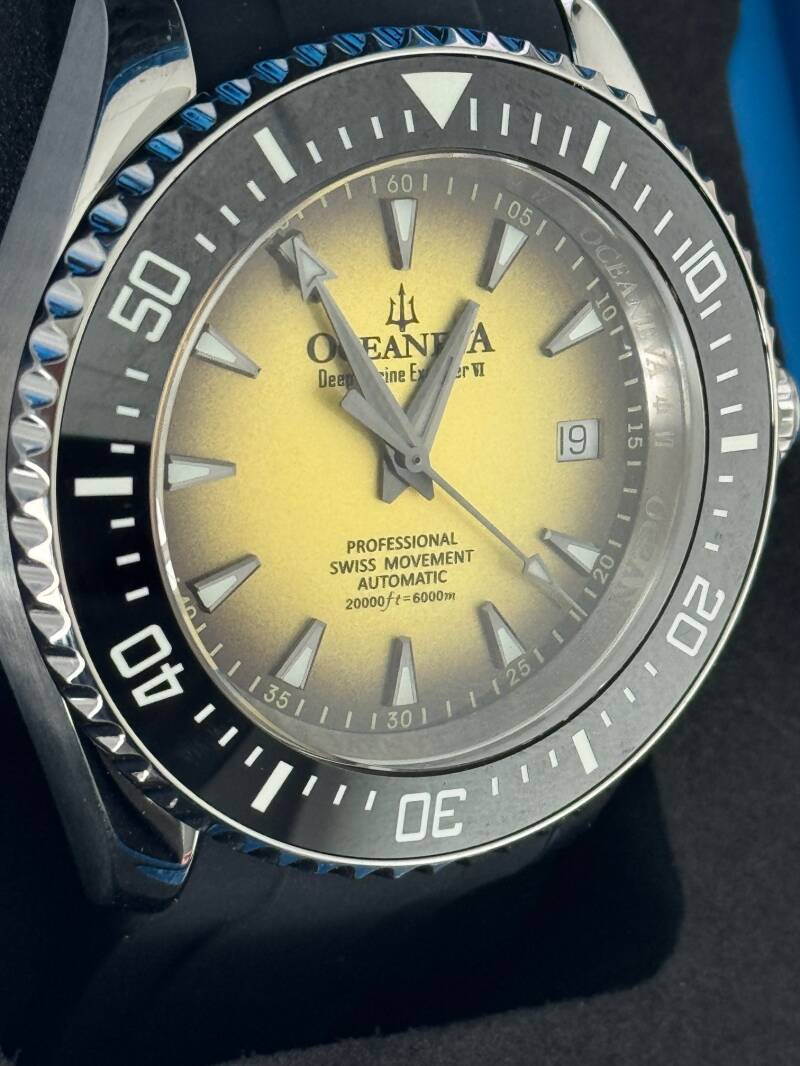
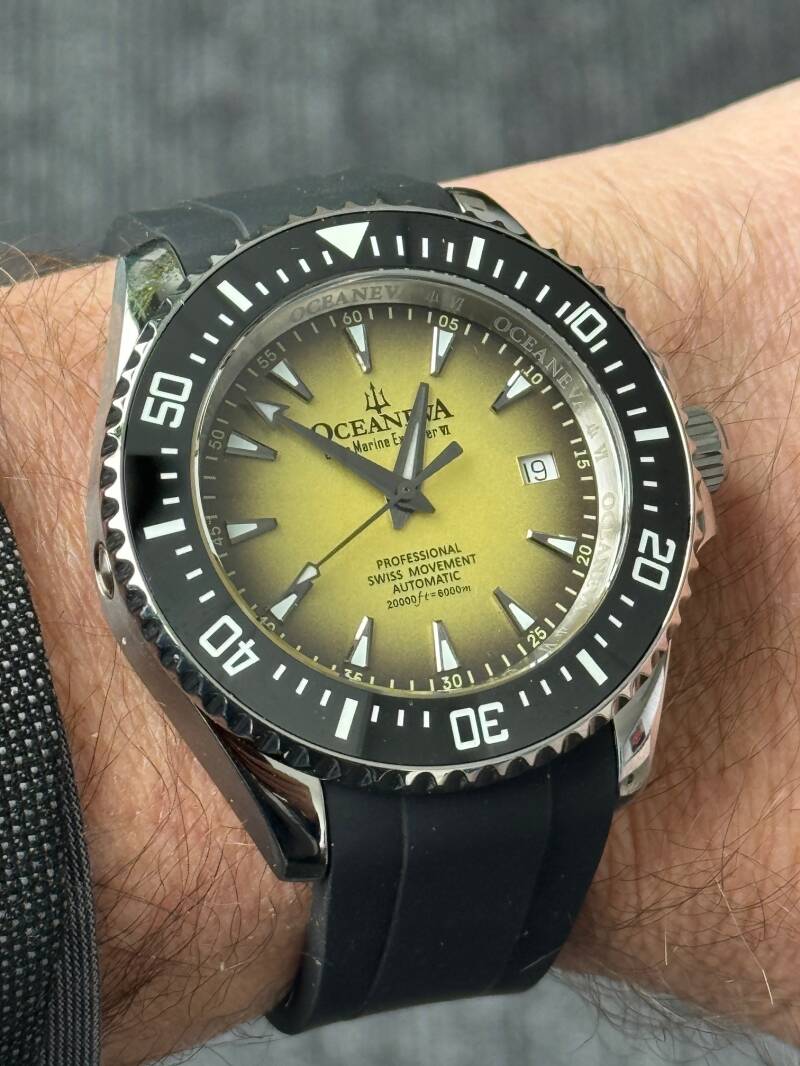
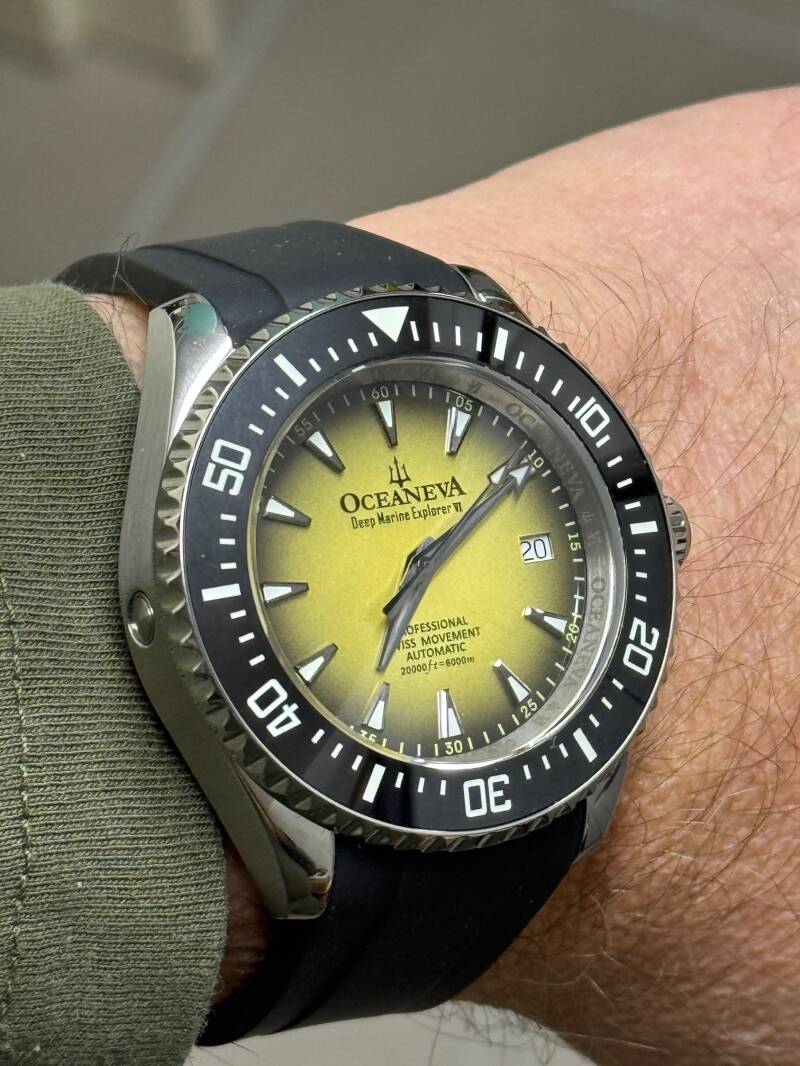

The downside of this decision is that at night the minute hand can be harder to read, especially near any index, because the minute pointer covers the marker and tends to visually “disappear.” Also, the luminous surface on the hour hand is very small, which means the lume doesn’t charge particularly well under light and then fades fairly quickly. As a result, at night the dial is clearly visible, but the actual time is not. This is, in fact, the only truly significant drawback of the new model—and one that does matter on a dive watch. In terms of lume performance, the first model is noticeably better than the new one.

At the same time, the sister 6000 m GMT model is also getting a major facelift. In its first iteration, it was visually almost a copy of the original DME VI, except that it used a Miyota 9075 GMT movement instead of a Sellita, which added an extra millimeter of thickness. For the GMT display, they even used the bezel. I never reviewed that watch, but I did mention it in my article about the Oceaneva Tanius, where I questioned the logic of using the bezel for GMT on a 6000 m dive watch—definitely not the right place for it on a proper diver. Well, an updated 6000 m GMT is now available for pre-order, and they’ve named it the “true dive GMT watch.”
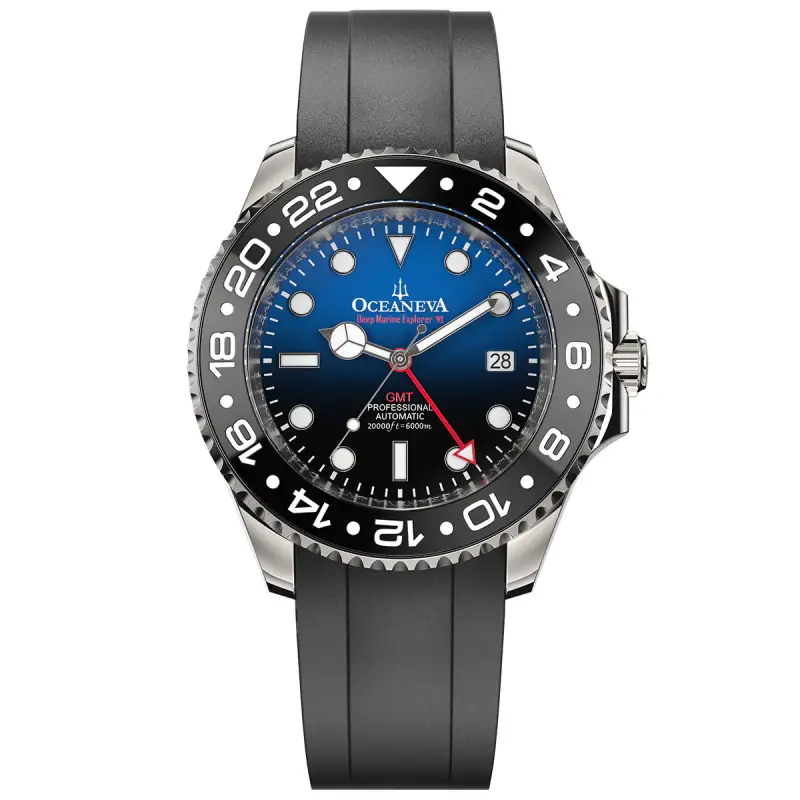
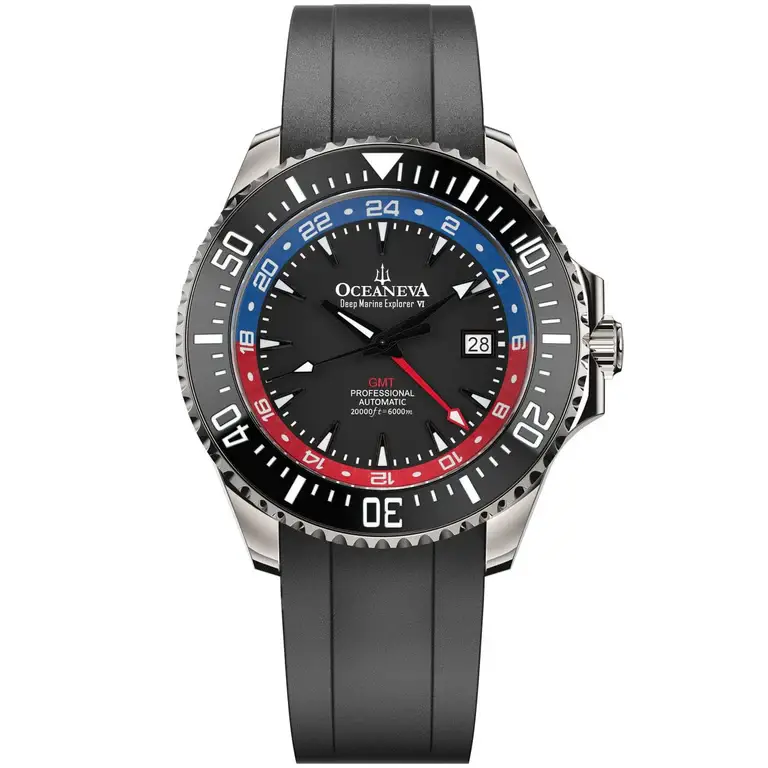
From the render photos of both watches you can clearly see, what the main change is, besides the same dial/hands facelift—and yes, it’s a change in the right direction. The GMT scale has been moved to an inner ring, and the bezel is once again a proper dive bezel. If the first version of the 6000 m GMT was a complete miss and a watch without a clear purpose, the new “true dive GMT watch” is something entirely different and actually makes sense. On top of that, they’ve played around with lume as well, and three of the true dive GMT models come with a full lume dial. Based on my exeprience with the lume on this new hands, the full lume dial might be the right answer to better legibility in the night.

It’s pretty clear at this point that Oceaneva really does listen to its customers and learns from its mistakes. In the second iteration, they’ve delivered two genuinely solid dive watches that, based on their specifications and especially their pricing for what they offer, definitely deserve your attention.
The true GMT diver is currently in pre-order at just 740–780 EUR (of course, plus shipping and import duties if you’re in the EU), while the 6000 m Coral is only available as a regular release and costs the same as the original 6000 m version—1,570 EUR, again plus shipping and import duties.
Add comment
Comments